
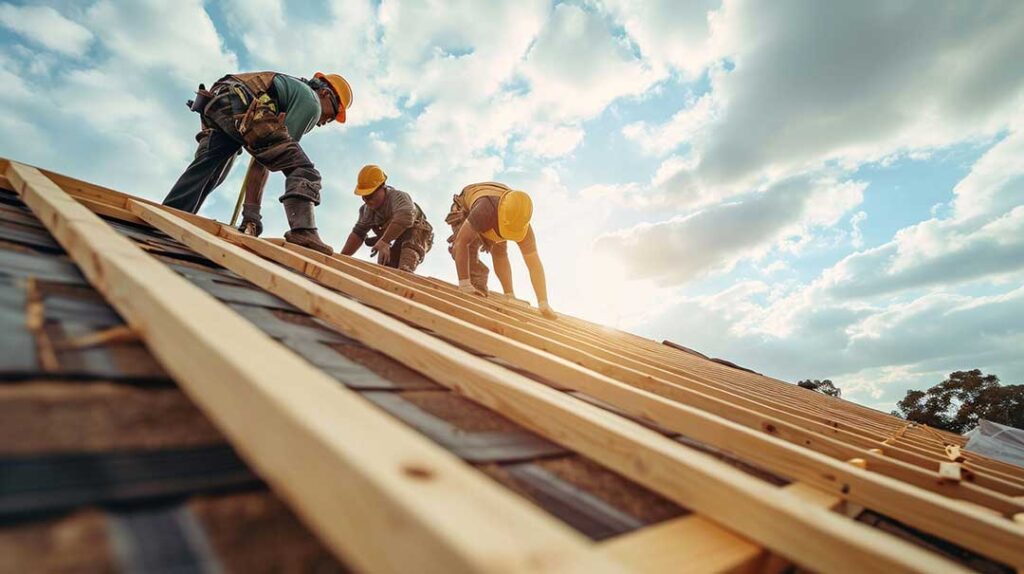
Roof decking is the structural surface installed over a home’s rafters or roof trusses and beneath the underlayment and shingles. Although it is hidden from view after installation, decking supports the roof covering, helps distribute weight, and plays a major role in how well a roof handles moisture, snow, wind, and seasonal temperature changes.
For homeowners in Depew, NY, understanding roof decking can make roof inspections, repair discussions, and replacement decisions easier to follow.
What is roof decking?
Roof decking, sometimes called roof sheathing, is the layer of panels attached to the roof’s structural framing. Modern homes most often use plywood or oriented strand board, commonly called OSB.
The decking forms the broad, continuous surface beneath materials such as:
- Underlayment
- Ice barrier membranes
- Asphalt shingles
- Metal roofing
- Other roof coverings
It is different from the rafters or trusses below it. Rafters and trusses create the roof’s shape and carry structural loads, while decking spans across that framing to create the surface where the roofing system is installed.
In older homes, decking may consist of individual boards rather than large panels. These boards can vary in width and may show gaps or irregular spacing. That construction was common before plywood and OSB became widely used.
Why does roof decking matter?
Roof decking provides support for the roof covering and helps transfer weight to the rafters or trusses. It also gives roofing materials a stable, relatively smooth surface for installation.
Sound decking helps the roof system perform properly by:
- Supporting shingles or other roof materials
- Distributing the weight of snow and ice
- Holding roofing fasteners securely
- Limiting movement and flexing
- Helping protect the attic from outside moisture when combined with the rest of the roofing system
Decking is not intended to act as a complete waterproof barrier by itself. Water protection comes from several layers working together, including flashing, underlayment, roof covering, and ventilation.
What types of roof decking are common?
Plywood and OSB are the most common decking materials in residential construction.
Plywood is made from thin wood layers bonded together with alternating grain directions. It is generally strong and dimensionally stable, although prolonged moisture exposure can still cause swelling, delamination, or decay.
OSB is manufactured from compressed wood strands bonded with adhesive. It is widely used in modern construction and performs well when properly installed and kept dry. Swollen edges, soft areas, or crumbling surfaces indicate that the material may have been affected by moisture.
Dimensional lumber is found more often in older roofs. Individual boards may remain serviceable for decades if they have stayed dry and structurally sound. However, some older board decking has wide gaps that may not provide the continuous surface required by certain roofing materials.
The correct decking approach depends on the roof design, existing materials, local building requirements, and the condition of the framing.
How does moisture damage roof decking?
Water damage is one of the most common concerns with roof decking. A small roof leak can eventually affect the decking if moisture reaches the wood repeatedly or remains trapped.
Common sources include:
- Damaged or missing shingles
- Failed flashing around chimneys, walls, or roof penetrations
- Ice dams that force water beneath the roof covering
- Blocked or poorly directed drainage
- Condensation caused by inadequate attic ventilation
- Wind-driven rain entering vulnerable areas
In Depew, winter snow, freeze-thaw cycles, and ice formation can place additional stress on roofing details. Snow itself does not automatically damage decking, but repeated melting and refreezing can expose weaknesses in flashing, ventilation, and roof drainage.
Moisture damage may appear as dark staining, soft spots, swollen panel edges, sagging, fungal growth, or a musty attic odor. Some problems remain hidden beneath insulation or roofing materials, so a visible ceiling stain does not always show the full extent of the damage.
How can someone tell if roof decking is damaged?
Roof decking usually requires inspection from the attic and, when necessary, during removal of the roof covering. Walking on the roof is not a reliable way for a homeowner to evaluate the decking and can create a fall hazard or cause additional damage.
From an accessible attic space, warning signs may include:
- Water stains or discoloration
- Soft or spongy wood
- Sagging between rafters
- Mold-like growth or surface deterioration
- Rusted fasteners
- Daylight visible through unintended openings
- Damp insulation near the underside of the roof
A roof may still look acceptable from the ground while the decking has localized damage. Conversely, stained wood may be old and dry rather than actively leaking. Determining whether damage is current often requires comparing attic conditions with exterior roof details and recent weather patterns.
Does all damaged decking need to be replaced?
No. Replacement depends on the severity, location, and structural effect of the damage.
A small area with surface staining may remain serviceable if the wood is dry, firm, and structurally intact. Soft, rotted, delaminated, or significantly swollen decking generally cannot provide dependable support for roofing fasteners and may need removal.
Replacement is more likely when:
- The panel or board bends under light pressure
- Fasteners no longer hold securely
- The wood has lost thickness or strength
- Damage extends across a broad area
- The decking is sagging between framing members
- The material cannot provide a suitable surface for the new roof covering
The source of the moisture also needs to be corrected. Replacing wood without addressing the leak, condensation, or drainage problem can lead to recurring damage.
Is roof decking replaced during every roof replacement?
Not necessarily. Roof decking is often inspected as the existing roof covering is removed. Sections that are sound may remain in place, while damaged areas are replaced before new roofing materials are installed.
Homeowners should understand that the amount of decking requiring replacement may not be known until the roof covering is opened. A visual inspection from the exterior can identify warning signs, but it cannot always reveal concealed deterioration.
A written roofing proposal or project description should clearly explain how decking repairs are handled, including:
- Whether inspection occurs during tear-off
- What conditions justify replacement
- How replacement areas are measured
- What material thickness or type will be used
- Whether additional structural repairs are treated separately
This information helps distinguish necessary repairs from optional upgrades.
What role does attic ventilation play?
Ventilation does not repair damaged decking, but it can help reduce moisture accumulation and excessive heat in the attic when properly designed with adequate insulation and air sealing.
Warm, moist indoor air can enter an attic through gaps around light fixtures, plumbing penetrations, attic hatches, and other openings. If that air contacts cold roof surfaces, condensation may form. Over time, condensation can stain or deteriorate decking even when the exterior roof is not leaking.
A balanced ventilation system typically allows air to enter near the lower roof edges and exit through higher portions of the roof. Ventilation openings should not be blocked by insulation, and simply adding vents without addressing air leakage may not solve the underlying problem.
What should Depew homeowners ask about roof decking?
Useful questions include:
- What type of decking is currently present?
- Was any moisture damage found in the attic?
- Are the soft or damaged areas localized or widespread?
- What evidence shows that the damage is active?
- How will the source of the moisture be corrected?
- Will the existing decking support the planned roof covering?
- Are attic insulation and ventilation contributing to condensation?
- How will unexpected decking repairs be documented?
Roof decking is easy to overlook because it is usually hidden. Yet its condition affects the stability, fastener performance, and moisture resistance of the entire roofing assembly. Understanding its role helps homeowners evaluate roof problems based on structure and evidence rather than appearance alone.
