
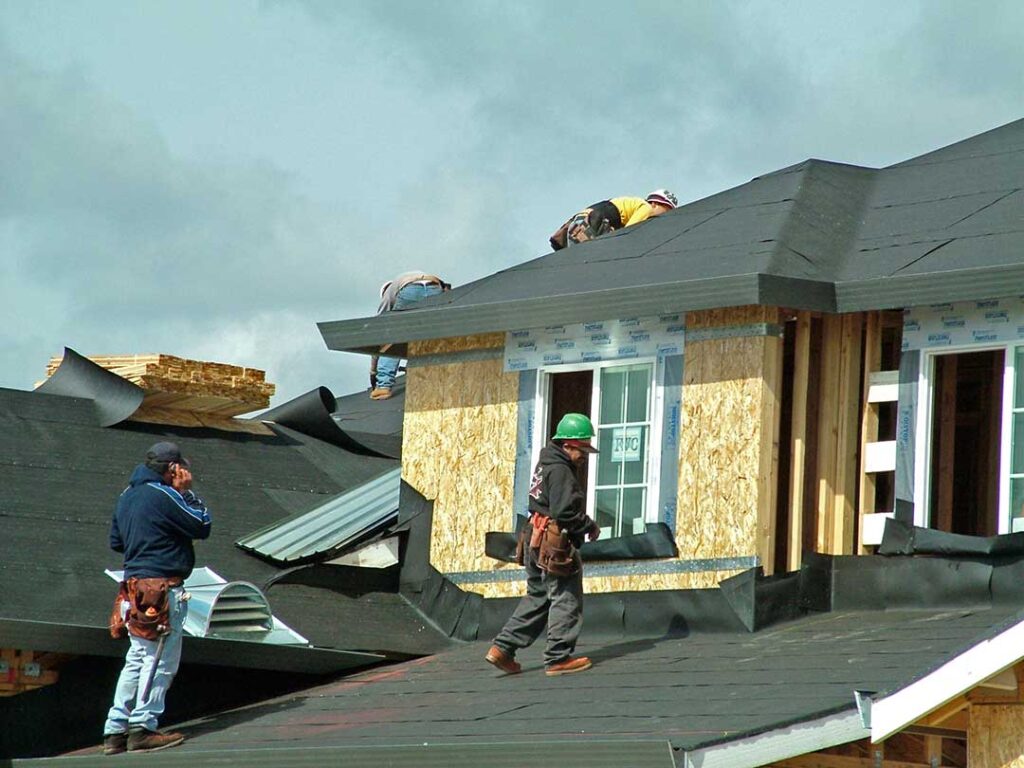
Roof decking is the layer of plywood or oriented strand board installed beneath the shingles and above the rafters or trusses. It supports the roof covering and helps distribute weight across the framing. When decking becomes wet, warped, delaminated, or rotten, the problem can affect more than the shingles.
In Depew, NY, repeated snow, freeze-thaw cycles, wind-driven rain, ice buildup, and seasonal humidity can all contribute to roof-decking problems. The earliest clues are often visible from the attic or inside the home rather than from the yard.
What does damaged roof decking look like?
Damaged roof decking may appear discolored, swollen, sagging, soft, or uneven. Some problems are obvious, while others remain hidden beneath shingles until the roof covering is removed.
From inside an attic, look for:
- Dark water stains or streaks on the wood
- Areas that appear darker than the surrounding decking
- Mold-like spotting or surface growth
- Plywood layers separating or peeling apart
- Swollen edges around seams
- Soft areas that yield under very light pressure
- Visible daylight around roof penetrations or damaged sections
Discoloration alone does not always mean the decking is structurally weak. A single past leak may leave a stain after the wood dries. However, active dampness, a musty odor, recurring staining, or visibly deteriorated wood deserves closer attention.
Can roof decking be damaged even when shingles look fine?
Yes. Shingles can look serviceable while water is entering through flashing, fastener holes, roof valleys, vents, or concealed damage. Shingles are only the outer weather-resistant layer; the decking below can deteriorate gradually without producing an obvious change at ground level.
A roof may also have sound-looking shingles over decking that has been weakened by an older leak. This is common when a small roof leak was patched but the wet wood was not fully dried or replaced.
Signs that the roof surface and decking may not be telling the same story include:
- A ceiling stain that returns after repairs
- Water appearing in a different location from the visible roof damage
- Shingles that feel uneven or “spongy” underfoot
- Nails backing out or failing to hold securely
- A roof surface that dips between rafters
- New leaks during wind-driven rain even though no shingles are missing
Walking on a roof to test for soft areas is not advisable. Wet or weakened decking may not support a person safely, and the roof covering can be damaged during the inspection.
What attic clues suggest a decking problem?
The attic is often the most useful place to observe roof-decking conditions. Inspect from a stable surface, use adequate lighting, and avoid stepping directly on insulation or the spaces between framing members.
Pay particular attention after heavy rain, a thaw, or a windstorm. Check areas around:
- Chimneys and plumbing vents
- Roof valleys
- Skylights and other roof openings
- Eaves and exterior walls
- Areas beneath roof penetrations
- Locations where ceiling stains have appeared
Wet insulation can indicate a roof leak, condensation, or both. If the decking is damp while the weather has been dry, indoor moisture may be reaching the cold underside of the roof. Bathroom exhaust, kitchen moisture, air leakage around attic openings, and inadequate ventilation can all contribute to condensation.
This distinction matters. Replacing damaged decking without correcting the moisture source may allow the problem to return.
Do dark roof boards always mean mold or rot?
No. Dark marks may result from an old leak, construction dust, wood variation, or minor surface discoloration. Mold and rot are more likely when staining is accompanied by persistent dampness, a musty smell, fuzzy or powdery growth, soft wood, or crumbling material.
Rot usually affects the wood’s strength. Affected areas may feel soft, break apart easily, or show separated layers. Mold can occur on the surface without immediately causing structural failure, but it signals that moisture has been present and the cause should be identified.
Do not scrape or disturb extensive growth without taking precautions. Airborne particles can be irritating, and hidden moisture may be affecting insulation or framing as well as the decking.
How do snow and ice affect roof decking in Depew?
Cold-weather conditions can expose weaknesses in the roof assembly. Snow adds weight, while freeze-thaw cycles allow water to move into small openings and then expand as it freezes. Ice dams can also form near the eaves when heat escaping from the home melts snow on warmer sections of the roof. Water may then collect behind the ice and move beneath shingles.
The decking may be at risk when winter problems are followed by:
- Brown stains near exterior walls or ceilings
- Wet insulation near the eaves
- Dripping during a thaw
- Peeling paint around upper-floor trim
- Sagging soffits or swollen fascia
- Repeated leaks in the same roof-edge area
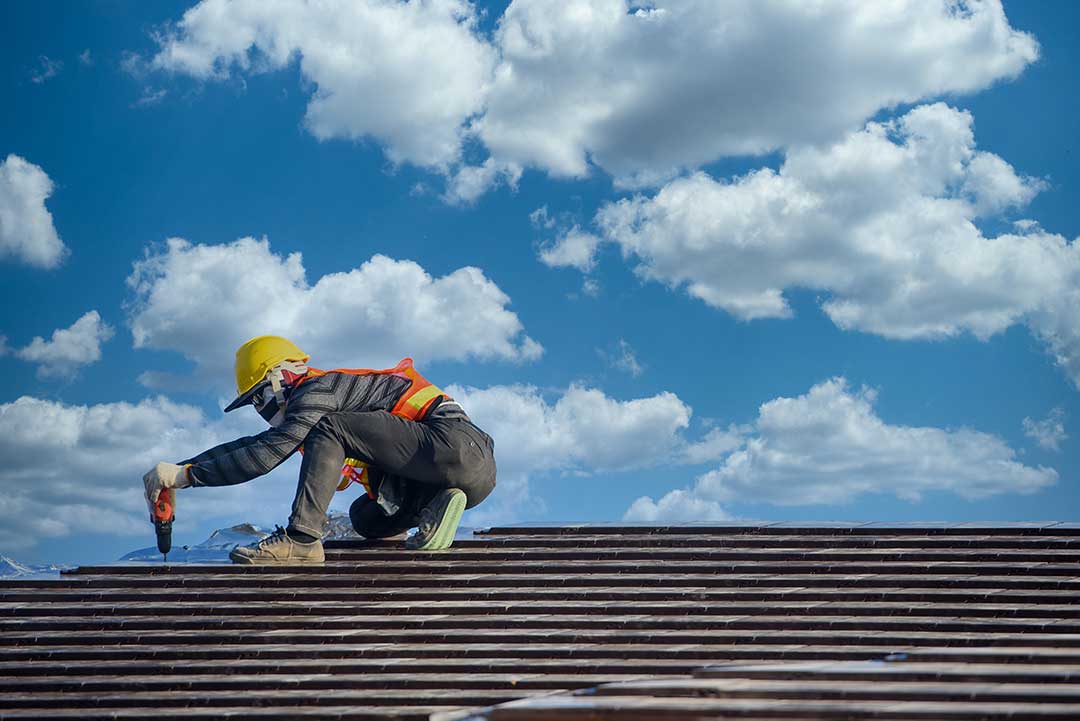
Not every winter leak means the decking must be replaced. The extent of damage depends on how long the wood stayed wet, whether it dried between events, and whether the leak source was corrected.
What indoor signs can point to roof-decking damage?
Roof-decking problems can appear inside the living space as well as in the attic. Watch for ceiling or wall changes that occur after rain, snowmelt, or strong winds.
Common indoor clues include:
- Yellow, brown, or gray ceiling stains
- Bubbling or peeling paint
- Soft drywall
- Damp insulation
- A musty odor near upper-floor rooms
- Mold growth around ceiling edges
- Water marks that expand over time
- Drips from light fixtures or attic access areas
Water does not always travel straight downward. It can move along rafters, trusses, insulation, wiring, or the top side of the ceiling before becoming visible. The location of an interior stain may therefore be several feet away from the roof entry point.
Any water near electrical fixtures should be treated cautiously. Turn off power to the affected area if it can be done safely and avoid touching wet electrical components.
When does roof decking need repair or replacement?
Localized discoloration with dry, solid wood may only require monitoring after the leak source is corrected. Decking that is swollen, delaminated, soft, mold-damaged, or structurally weakened generally requires more than surface treatment.
Replacement is more likely when:
- Fasteners no longer hold securely
- The wood has lost thickness or shape
- Sections sag between rafters
- The decking crumbles or separates
- Water damage covers a broad area
- The roof framing has also been affected
- A leak has continued through multiple seasons
Because decking is part of the roof’s structural support system, extensive deterioration creates a safety concern. Areas that sag noticeably, show active dripping, or appear unstable should not be entered or disturbed.
What should homeowners document before repairs?
Clear documentation can help distinguish an active leak from an old one. Photograph attic stains, wet insulation, damaged wood, ceiling marks, and exterior roof features from safe locations. Record when the problem appears and whether it follows rain, snowmelt, wind, or a plumbing or ventilation event.
It is also useful to note whether the roof has been repaired before, whether bathroom or kitchen exhaust is directed outdoors, and whether the attic has signs of condensation. These details can help identify the underlying cause instead of treating only the visible stain.
The central question is not simply whether roof decking looks old. It is whether the wood remains dry, firm, properly supported, and protected from recurring moisture. Early attention can limit the spread of damage, while ignoring soft or persistently wet decking can eventually affect insulation, framing, ceilings, and indoor air quality.
